The struggle is real: you’re a new blogger who starts publishing blog posts. However, soon find your content is disorganized, and you’re not sure what to write about next. You’re losing momentum, and you’re not seeing your blog traffic inching up at all. It’s time to step back to do some blog content planning.
From my experience as a blogging strategist and coach, most new bloggers don’t struggle with ideas, but rather direction.
Publishing consistently just doesn’t cut it: without a structured blog content strategy and plan in place, their website becomes a mess. They fail to see growth in the first few months, and inevitably, they quit.
Successful blog growth requires blog structure and, most importantly, a simple, cohesive blog content plan… before you publish your first 50 posts! It includes grouping blog topics and key posts in a way that makes sense and identifying how they work with key blog pages.
Here’s an interesting stat: 62% of the most successful B2B content marketers have a documented content strategy.
When you take the time to plan your blog content early, you create a structure that supports consistent publishing, stronger SEO, and a more organized experience for your readers. In other words, you’re blogging confidently with intention.
This guide walks you through three easy ways to create a blog plan that helps you stay focused, build topical authority, and grow your blog with intention.

DISCLOSURE: This post contains affiliate links, meaning if you click on a product or service, and decide to purchase it, I may receive a commission at no extra cost to you. All recommended products and services are based on my positive experience with them. For more information, please read my Disclaimer.
Bookmark this post on Pinterest for future reference.
Create Your Own AI Blog Assistant
Teach ChatGPT, Claude, and Gemini everything they need to know about your blog, goals, audience, and unique brand voice. This free guide shows you exactly how to get more accurate content, better ideas, and on-brand responses from your AI assistant!
Why Blog Content Planning Is Important
Before you get caught up in the excitement of writing and publishing blog posts, create a solid blog content plan and structure.
A clear blog plan helps you:
- Understand how your whole blog and website is structured: you have an overall view
- Stay consistent with your blog post editorial calendar
- Build content around specific topics instead of random ideas
- Improve your blog site structure and content organization
- Make it easier for you to interlink blog posts
- Help readers find related posts
- Help search engines understand your niche and expertise
Additionally, you feel less overwhelmed because you have a system in place that’s easy to follow. There’s less burnout because you’re organized!
You may feel like this is just one extra step. However, it’s part of the reality of successful blogging.
Blog Content Planning For Beginners: 3 Easy Tips
Let’s make it easier to plan your blog content. These three steps will help you identify the best blog topics for the next few months.
Organize yourself so the writing and publishing process is smoother and intentional.
1. Choose Blog Categories With Intention
Categories are the foundation of blog post content. You need to determine these before moving ahead with blog content planning.
Blog categories define what your blog is about and guide every post you make moving forward.
Haven’t created your blog categories yet? It’s the perfect time to do so. Here’s how to do it.
Choose three to five core broad topics that:
- Reflect your blog’s niche and purpose (your “Why”)
- Work with your audience’s interests
- Can work well with your future content ideas in the long term
For example, if you have a sustainable living blog for women:
- Sustainable Beauty
- Sustainable Skincare
- Sustainable Self-Care Activities
- Sustainable Home
All of these work together, focused on women’s interest in living a more natural, better life.
Remember to keep your categories focused!
When you’re creating your categories:
- Don’t create too many categories at once. You can add new ones later.
- Keep the names (labels) clear and easy. Don’t make it hard for readers and search engines to understand.
- Plan for the long-term. Make sure the category can grow with new relevant blog posts
Having set categories means you’ve now taken the first step to creating a blog content plan with intention.
I find that understanding my categories helps me from never having to wonder what to write about. When I started creating content within a structured system, the topic generation and writing process were much easier.
2. Build Your Blog Plan Around Cornerstone, Pillar and Topic Cluster Content
Now that you have your categories, your next step in blog content planning is to organize what you will write within each category.
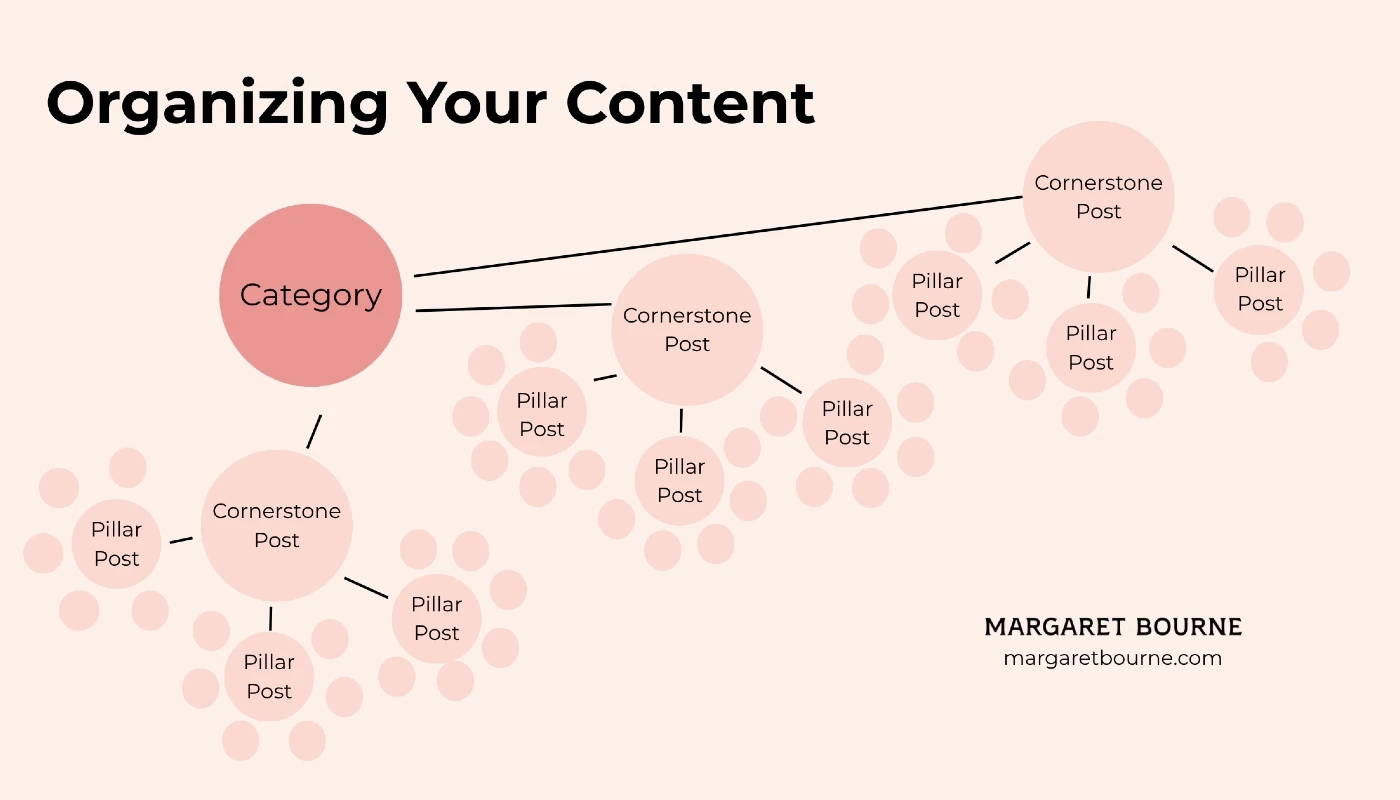
Start with cornerstone blog posts for each category. These are big blog posts on a broad topic for the category that showcases your insights and knowledge.
For example, Blog Writing is one of my categories. For this, I have a cornerstone blog post “How To Write Blog Posts Like A Pro.” It covers many sub-topics and provides a thorough overview of the blog writing process.
Pillar Posts That Support Cornerstone Posts
A core part of blog content planning is determining your pillar posts. These are big core sub-topics that support your cornerstone posts.
Pillar posts usually create a topic cluster on their own. Their role is to help build a foundation where you can interlink related topics around one bigger topic.
For example, in my “How To Write Blog Posts Like A Pro” cornerstone post, one of the sub-topics I mention is the various types of blog posts.
For this, I’ve created a pillar post: Different Types of Blog Posts
Another pillar post could be about choosing the right blog post topics.
These pillar posts can support additional, interlinkable sub-topic posts called “topic clusters.”
Topic Clusters Within Each Pillar Post
Topic clusters are a group of related blog post topics that are connected through a general topic (pillar post).
Think of it as a hub with spokes on a wheel. The spokes are like the topics around a pillar post.
Here’s an example of how I would create a blog content plan with a topic cluster for my pillar post example (different types of blog posts).
The topic cluster could include topics like:
- A Guide To Creating Evergreen Content
- How To Write Product Review Posts Including Affiliate Reviews
- Tips For Writing Seasonal Blog Posts
And so on… All of these connect with the pillar post – “16 Different Types of Blog Posts”
This approach works because:
- It builds topical authority around your main topics
- It improves your internal linking strategy
- It makes it easy for readers and search engines to journey through your topics
3. Organize Your Blog For Easy Navigation
Now that you have a series of blog post topic clusters and pillar content, it needs to connect with your site organization.
This is where your blog site structure and content come together.
Here’s how to make it all work:
- Keep your blog menu simple. Make it easy for readers to understand your blog and find what they’re looking for quickly.
- Use best practices for blog organization. Keep labels clear for your categories and pages in your menu. Don’t overload the menu with too many links, and keep topics grouped together.
- Determine how blog posts interlink with key pages. This is all part of structure planning.
- Always think about the user experience. Always ask yourself if the reader can quickly understand what your blog offers. Can they explore related topics easily? Is the structure designed to keep them on your site longer, exploring more?
Why is it important to organize your menu? Here are a few key reasons why:
- It keeps your readers on your blog longer, engaged with your content
- Your content is more discoverable
- It helps you with your long-term blog planning and growth (you have a roadmap)
Create A Simple Blog Content Plan
Now it’s time to create your blog content plan. Remember that the KISS rule applies to blog content planning and topic grouping: Keep It Simple Silly!
Let’s run through the process so it’s easier for you to create a blog topic list and roadmap for your first two to three months of blogging. Here’s how you do it:
- Choose one blog category
- Determine the cornerstone blog post topic (1 topic)
- Determine the pillar post topics (2 to 3)
- Choose one of the pillar post topics and create a list of 4 to 5 related topic clusters for it
- Write the cornerstone post
- Next, write the pillar post and interlink it with the cornerstone post
- Now write the sub-topics for the pillar posts and interlink them with the pillar post and the other posts in the topic cluster
And now you have a well-organized and structured website. You’ve got topical clusters, pillar posts and cornerstone posts. Blog content planning takes the guesswork out of what to write next.
PRO TIP: Use your favourite organization tool like Google Sheets, Airtable or Notion to keep track of your blog post ideas and what type they are (topic post, cornerstone, etc.). Learn how to create a full blog content editorial calendar for a year’s worth of blogging.
Your Blog Content Structure Includes Key Pages
You can create a blog content plan with your blog posts, but what about other key pages? They are an important part of your blog content structure as well.
For example, what about landing pages for a free offer you’re sharing to build your email newsletter? How does it connect with specific blog content?
Or a favourite tools page — can you link it to product reviews you’re doing in a specific topic cluster?
These need to be included in your blog content plan. Take them one step further: link to them from your blog posts when it makes sense.
Here’s why I recommend this approach: interlinking your blog posts to key pages helps boost their rankings SEO-wise. This is especially important if they are what’s called “money pages”, showcasing your affiliate links, digital products you sell or your services.
Planning Blog Content Is Your Pro Blogging Super Power
Once you learn how to organize blog content and create a solid structure like a pro, it’s much easier to:
- Stay consistent with your blog content creation
- Make it easier to create a cohesive topical cluster that readers and search engines love (because it’s so easy to understand your topical expertise and navigate through your website)
- Interlink your content for SEO best practices
- Promote your content on Pinterest and other social media in topical blocks, placing a spotlight on your knowledge and expertise in specific topics
You can repeat Step 2 for every category, cornerstone post and pillar post you have.
Ready to start planning your blog content? Don’t forget to optimize your content by linking your posts and pages. Take my free SEO course — sent straight to your email inbox —
Start blogging with intention, confidently!
NOTE: Use this free Google Sheets content editorial calendar template to get organized.
QUESTION: Have you started creating a blog content plan? What’s holding you back?
Love this post? Share it on Pinterest – thanks!
Want more blogging advice from Margaret?
Add MargaretBourne.com as a Preferred Source so Google can highlight more of my blogging advice for you in Search, AI Overviews and AI Mode.