Your blog post is ranking in search results, but it’s not getting clicks. What gives? It’s most likely not your content, but your SEO title. It needs to grab a potential reader’s attention. Now you’re wondering how to write an SEO title that does just that.
You’re on the right track. You need to quickly attract interest as people scroll through options in search results.
Writing SEO titles that attract clicks and help you rank better is a must-have skill for bloggers. It’s part of your on-page SEO checklist that’s a must-do.
It’s now more important than ever to have a compelling SEO title as your blog post may be cited in a Google AI Overview result. Your goal is to improve your click-through rate (CTR) on SEO titles to keep organic traffic growing.
It’s getting harder to generate traffic in regular search results as posts get pushed down on the results page. So, it’s vital you catch a person’s eye with a click-worthy SEO title in AI Overview results.
I’ve started to work on my SEO titles for posts that are showing up in Google AI results, and I’m starting to see a difference in traffic.
While blog post headlines are hidden from initial view, the SEO title is the first opportunity to attract interest. You now understand why they are important.
In this post, I’ll share insights into what an SEO title is, SEO title best practices, SEO title examples, and the best tools to use to quickly write SEO titles.
Check out my post on how to write blog titles (headlines), and then these SEO title tips and start implementing them ASAP.

DISCLOSURE: This post contains affiliate links, meaning if you click on a product or service, and decide to purchase it, I may receive a commission at no extra cost to you. All recommended products and services are based on my positive experience with them. For more information, please read my Disclaimer.
Bookmark this blog post on Pinterest for future reference.

What Is An SEO Title?
A SEO title (also called a SEO title tag) is a clickable headline that appears in Google search results. It tells search engines and readers what your blog is about.
When written well, it helps your blog post rank for specific keywords and attracts interest in the Search Engine Results Pages (SERPs).
As a result, this increases clicks and traffic to your site.
Are a blog post title and SEO title the same thing? No.
Your blog post title (H1) is a headline that is usually longer, attracting readers to keep reading your post. It usually has more space, giving you a chance to infuse it with your brand voice.
Blog post titles show on the blog post and on your website (e.g. blog page or category page). Meanwhile, the SEO title is shown in:
- SERPs
- Browser tabs
- Social shares (sometimes)
PRO TIP: I always like to take the keyword and write two versions: a short and sweet version for the SEO title, and then expand on it for the headline title. Sometimes it’s easier to start writing your headline and blog post before you write your SEO title.
Why SEO Titles Are So Important
We’ve already touched on this briefly: they are what attracts interest and clicks in search engine results, as well as citations in Google AI Overviews.
They are also important as they:
- Impact ranking on search engines: Google uses the SEO title to identify the keyword and topic.
- Impact click-through rate: Well-written SEO titles tap into an emotion and are clear on the topic
SEO titles are also your chance to make a first impression on a reader. Craft them like a copywriter and you’ll find your click rate improves.
SEO Title Best Practices: Anatomy of a High-Performing Title
Let’s explore a bit deeper on how to write an SEO title that generates clicks. These are SEO title best practices that you should try to use every time you write one.
1. Use Your Primary Keyword Early
One of the best SEO title tips I can share with you is this one: take your main keyword and try to place it in the front of the SEO title.
Like this – keyword is “how to start a blog“.
“How to Start a Blog: An Easy Beginner’s Guide 2025”
Not like this:
“A Beginner’s Guide: How To Start A Blog”
2. Keep It Short & Sweet (But Specific)
There’s not much space in an SEO title: 55–60 characters maximum.
So your SEO title needs to be:
- Concise
- Clear
- Compelling
PRO TIP: Need to quickly check your SEO title length? I like to pop into Quillbot to use their free character counter.
3. Use Copywriting Techniques For Clickability
Copywriters use various techniques to attract interest, and they’re perfect for SEO titles. Consider using:
- Power words
- Numbers (perfect for listicles)
- Emotional hooks
PRO TIP: Check out this awesome list of power words to help you grab interest quickly. I have this post bookmarked and use it for SEO titles and many other copywriting situations.
4. Avoid Keyword Stuffing
When it comes to SEO title best practices, choose the main keyword and use only it in the title.
Don’t try to add more than one to an SEO title, as it may come across as keyword stuffing.
5. Add Branding (Optional)
This works best for pages, and when you want to boost your brand recognition. If your SEO title is very short and it makes sense to brand it with your blog title, do it!
For example: Blog Coaching Services | Margaret Bourne
Keep it at the end for consistency.
6. Use Yoast or Rank Math To Craft Your SEO Title
You won’t be able to specify the SEO title without RankMath or Yoast. The free versions of these SEO plugins are all you need.
Here’s how you edit your SEO title in RankMath, my favourite SEO tool:

SEO Title Examples (The Good & The Bad)
Let’s look at some good and bad SEO title examples, so that you can start improving yours.
| Bad SEO Title | Good SEO Title |
|---|---|
| Tips for Bloggers | Easy SEO Tips for New Bloggers in 2025 |
| Write Titles For Blog Posts | How To Write SEO Titles That Get Clicks |
| Summer Travel Ideas | Best Summer Travel Ideas For Solo Women Over 40 |
You can see how the good SEO titles tap into emotions and capture interest. Use some promise of an outcome, e.g., “that get clicks“.
Put your copywriter’s cap on and start to create better SEO titles.
Common SEO Title Mistakes To Avoid
I’ve shared with you the best SEO title tips, but now let’s talk about things you should avoid doing.
When it comes to writing SEO titles, avoid:
- Making it too long or it gets cut off (maximum is 60 characters)
- Not making it descriptive enough: using the keyword but without context
- Trying to be too clever or vague: avoid puns, as Google doesn’t understand them
- Not matching the SEO title to the blog content
- Duplicating SEO title tags: only one title to one page, otherwise it confuses search engines.
Improve your ranking by being specific, and align the SEO title with the blog post title.
Best Tools For Writing SEO Titles
Not all of us are copywriters, so this next section is going to be helpful.
Here are my favourite tools for writing SEO titles that you should check out as well:
- Keywords Everywhere: Keyword search using Google Autocomplete
- Keysearch.co: Keyword research for volume and difficulty – a must-do before you begin writing your blog post.
- ChatGPT : With the right prompts, it’s a breeze to create a list of potential SEO titles. Great for A/B testing.
- RankMath: My ultimate free SEO plugin for WordPress, that not only allows you to add your SEO title, but also has other keyword features that make it so much better than Yoast.
- Sharethrough Headline Analyzer: A free tool that tells you how engaging your SEO title is.
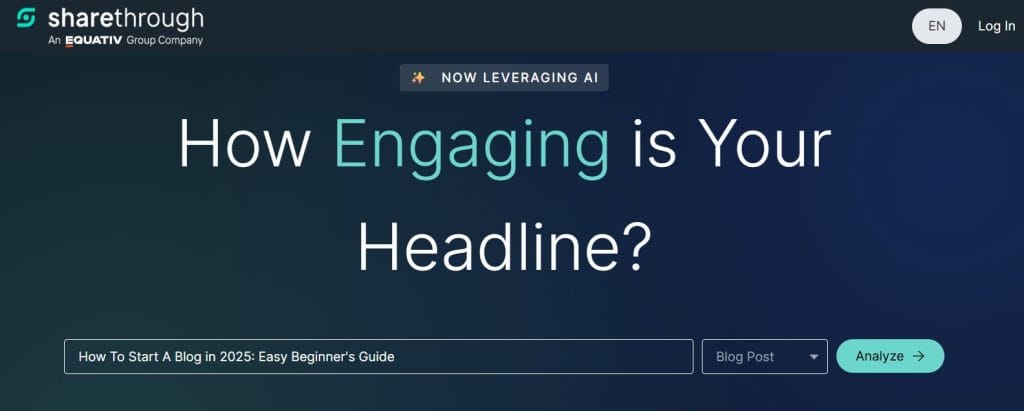
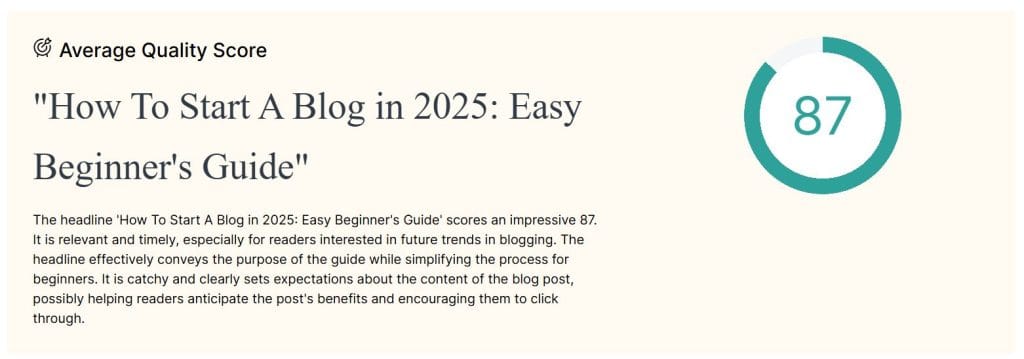
Using these tools helps you craft better SEO titles faster! Find the best ones that work for you.
A/B Test Your SEO Titles
You’re not stuck with the same SEO title forever for your blog post.
If it’s not generating click-throughs, you can always change it.
Here’s what I like to do for A/B testing SEO titles:
- Create 5 to 10 SEO titles for a blog post using ChatGPT
- Test one per month
- Monitor Click-Through Rate (check it via Google Search Console for that specific page)
- Adjust to a new one as needed
If something’s not working, switch it up!
Get Started With These SEO Title Tips
Now you understand how to write SEO titles for blog posts.
You’ve learned about the SEO title best practices, checked out good and bad title examples, and know about tools that make writing them easier.
Your next steps should be:
- Reviewing your existing blog posts that aren’t getting traffic. Check the Click-Through Rates in Google Search Console. If they are low, these are the ones that need SEO title updates.
- Use ChatGPT to update the SEO titles based on the keywords. Update them in your blog content.
- Monitor them over the next few weeks to see if they have a bump up in ranking and also clicks.
- Repeat as needed.
I hope this has helped you understand how to write effective SEO titles.
Learn more about SEO by checking out the following related posts:
- How To Optimize Blog Images For SEO
- 20 SEO Mistakes You May Be Doing
- 10-Steps To Updating Your Blog For SEO
- How To Get Backlinks To Your Blog
- 4 Interlinking Strategies That Boost Ranking
QUESTION: What is your greatest struggle with writing SEO titles?
Love this post? Share it with others on Pinterest! Thanks.

Want more blogging advice from Margaret?
Add MargaretBourne.com as a Preferred Source so Google can highlight more of my blogging advice for you in Search, AI Overviews and AI Mode.